

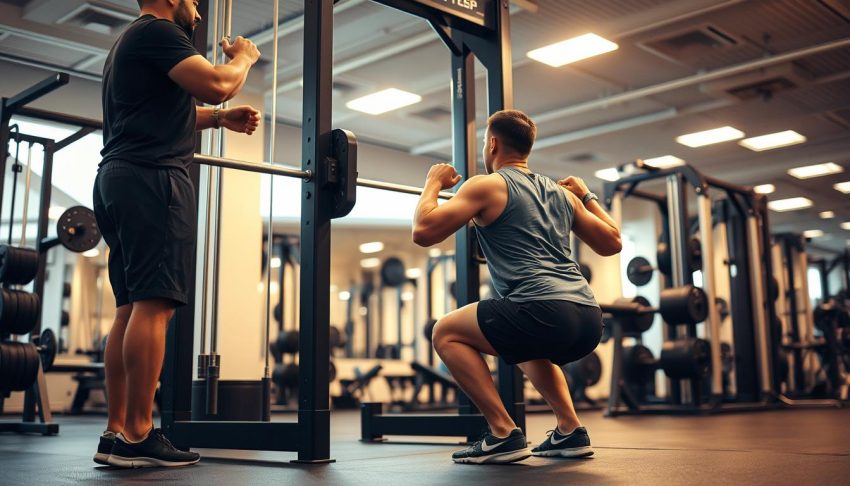
Welcome to your complete guide on mastering the squat exercise smith machine. This guide helps you get the most from this often misunderstood gym equipment.
We will explore why the smith machine deserves more credit. It is great for building leg strength and size safely.
This piece of equipment can be your perfect training partner. It works for beginners and experienced lifters alike. You can target specific muscle groups with precision.
Learn why this movement is a compound exercise with isolation traits. It lets you focus on particular areas of development.
Get ready to change your leg day routine. Our friendly guide breaks down everything you need to know.
Key Takeaways
- The Smith machine is excellent for building leg strength safely.
- It suits both beginners and advanced lifters.
- This equipment allows targeted muscle engagement.
- Proper form and position are crucial for effectiveness.
- It combines compound and isolation exercise benefits.
- Using the guided bar helps maintain correct body alignment.
- Adjusting weight appropriately maximizes results and reduces risk.
What is a Smith Machine Squat?
Let’s explore this specialized equipment that has become a staple in modern gyms. The smith machine offers a unique approach to strength training.
Understanding the Smith Machine Design
This innovative piece of equipment features a barbell that moves along steel rails. The design allows for vertical or slightly angled movements only.
You’ll find two main types available. Standard models move straight up and down. Angled versions better match natural body movements.
The built-in safety features make this equipment stand out. Safety stoppers and hooks protect you during your workout. Reracking becomes much simpler and safer.
How Smith Machine Squats Differ from Free Weight Squats
The key difference lies in the fixed bar path. Unlike free weights, the machine guides the movement for you.
This guided approach changes how you experience the exercise. You don’t need to stabilize the weight as much. This lets you focus on the lifting motion itself.
Your range motion becomes more controlled. The fixed path provides exceptional stability throughout each repetition. Many find this the safest way to build lower body strength.
Understanding these differences helps you appreciate this equipment’s value. It offers a distinct training experience that complements traditional methods.
Smith Machine vs Squat Rack: Key Differences
Choosing between training options requires knowing their unique characteristics. Each piece of equipment offers distinct advantages for building lower body strength.
The guided system and standalone rack represent two different training philosophies. Understanding these differences helps you make informed decisions about your workout routine.
Fixed Bar Path vs Free Movement
The most noticeable contrast lies in movement freedom. The guided system follows a predetermined track while free weights move naturally.
This fixed path reduces stabilization demands significantly. You can concentrate on pushing power rather than balance control.
Free weight movements engage more stabilizing muscles throughout your body. They require constant core engagement and coordination.
Safety Features and Stability Comparison
Built-in protection mechanisms make the guided system exceptionally secure. Adjustable safety catches automatically stop the bar if you struggle.
These features provide peace of mind when training alone. You can push your limits without worrying about getting stuck.
Free weight training often requires a spotter for heavy attempts. Knowing proper bail-out techniques becomes essential for safety.
The guided system’s stability comes from its fixed rails. This design minimizes sideways movement during your repetitions.
Weight Differences and Loading Capacity
The bar itself weighs considerably less than standard Olympic bars. Most guided systems use 15-25 pound bars versus 45-pound Olympic bars.
Despite the lighter bar, people often lift more total weight on guided systems. The reduced stabilization effort allows greater focus on primary muscles.
- Guided system bars: 15-25 pounds typically
- Olympic bars: 45 pounds standard weight
- Increased loading potential on guided systems
- Reduced stabilization demands boost performance
Your body adapts to the equipment’s movement pattern with guided training. Free weights follow your natural biomechanics more closely.
Both options deserve consideration in a balanced training program. Each serves different purposes depending on your goals and experience level.
Muscles Worked During Smith Machine Squats
Understanding which muscles you’re working helps maximize your training results. The guided bar path creates unique engagement patterns worth exploring.
Primary Muscle Groups Targeted
Your quadriceps receive the most attention during these movements. These front thigh muscles power your upward drive.
Your glutes and inner thigh adductors work hard too. They activate strongly during the lowering and rising phases.
The fixed path lets you focus energy on these primary movers. You can really feel them working throughout each repetition.
Secondary Muscles Engaged
Your core muscles provide important stabilization support. They help maintain proper body alignment during the movement.
Calf muscles and hamstrings contribute to the motion too. They assist in controlling your descent and powering your ascent.
Various stabilizers throughout your lower body activate as well. Though less than with free weights, they still get valuable work.
How Foot Placement Affects Muscle Activation
Where you place your feet changes everything about muscle emphasis. Small adjustments create big differences in training focus.
Moving your foot position forward targets your glutes and hamstrings more. This placement creates deeper hip flexion during the movement.
Keeping your feet under the bar emphasizes quad development. This classic stance builds powerful front thigh muscles.
Wider stances engage more inner thigh and glute muscles. They allow for greater depth and hip activation.
Experiment with different position options during your training sessions. Find what works best for your specific goals and comfort.
Benefits of Smith Machine Squat Exercise
Unlock the full potential of your training with these proven benefits of guided bar training. This equipment offers unique advantages that can enhance your workout experience.
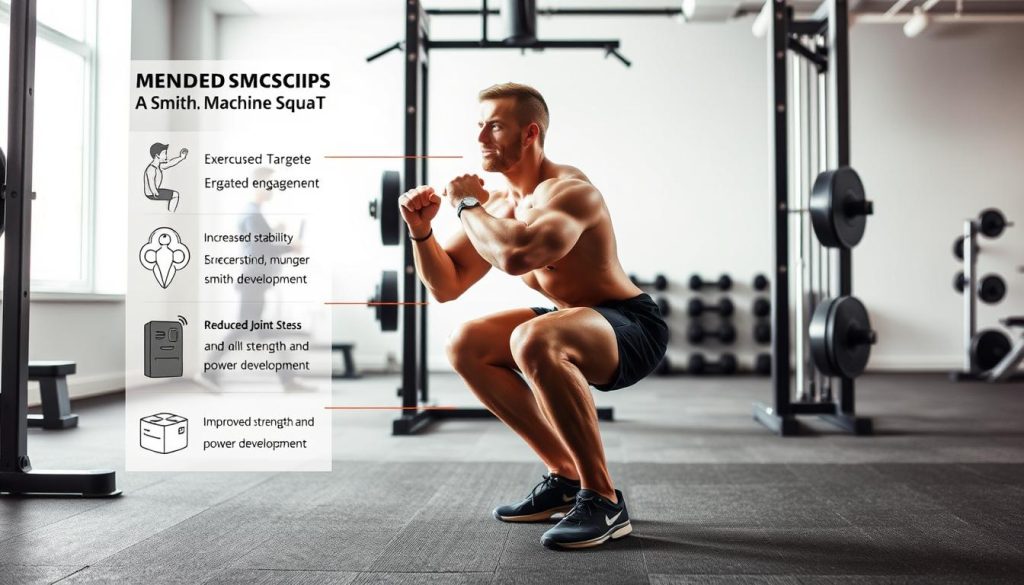
The fixed-path design creates a controlled environment for development. Many athletes discover improved results using this method.
Ideal for Beginners and Safety-Conscious Lifters
Newcomers find this system perfect for learning proper technique. The guided movement builds confidence without balance concerns.
Built-in safety features provide peace of mind during training. You can always rerack if you struggle with the load.
This approach eliminates the need for a spotter. It’s excellent for rehabilitation or working around injuries.
Increased Weight Lifting Potential
Studies show people often lift more using this equipment. The reduced stabilization effort allows greater focus on primary movers.
You can progressively add small increments over time. This consistency leads to better long-term development.
“The fixed path allows concentrated effort on pushing power rather than balance control.”
Targeted Muscle Group Emphasis
Adjust your foot placement to emphasize different areas. Small changes create significant focus shifts.
Forward positioning targets posterior chain development. Under-the-bar placement builds powerful front thigh muscles.
Wider stances engage more inner thigh and glute activation. Experiment to find what works for your goals.
Reduced Joint Strain and Injury Prevention
Many experience less knee and lower back discomfort. The controlled path minimizes unnecessary stress.
Proper alignment becomes easier to maintain throughout movements. This protection helps prevent training setbacks.
Gradual progression supports joint health long-term. You can build strength without compromising your body.
How to Properly Set Up for Smith Machine Squats
Getting your setup right makes all the difference in your training experience. A proper starting position ensures safety and maximizes effectiveness.
Adjusting Bar Height and Safety Stoppers
Always begin with the safety features. Set adjustable stoppers just below your lowest range of motion.
This creates your emergency backup if you struggle with a repetition. Adjust the bar height so it sits slightly below shoulder level.
You shouldn’t need to rise on your toes to unrack the weight. This proper height setting makes everything flow smoothly.
Proper Weight Plate Loading
Load weight plates evenly on both sides of the bar. Always secure them with collars to prevent shifting.
Balanced loading maintains stability throughout your movement. It prevents uneven stress on your body during the exercise.
Initial Body Positioning
Step under the bar letting it rest across your upper traps. Avoid placing it on your neck or upper back.
Place your hands on the bar just outside your shoulders. Use a comfortable grip that feels natural.
Take a step or two forward from the machine. Position your feet shoulder-width apart with toes pointing slightly outward.
Lean back slightly so your upper back presses into the bar. This creates a stable starting position for your movement.
Step-by-Step Guide to Performing Smith Machine Squats
Mastering the proper technique transforms your workout experience completely. This detailed walkthrough ensures you perform each movement with confidence and precision.
Following these steps helps you build strength while maintaining perfect form. Let’s explore each phase of this powerful movement.
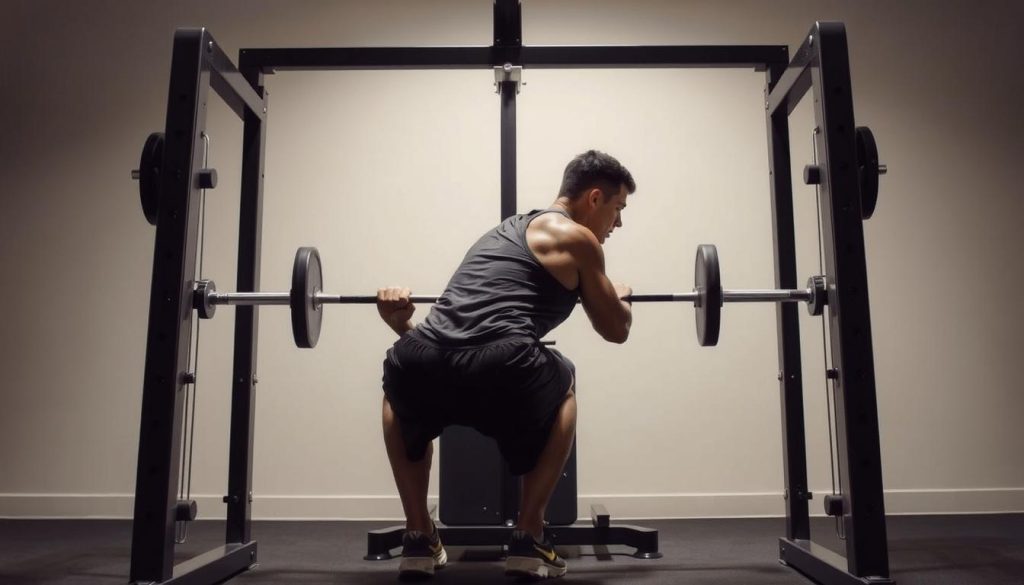
Unracking the Bar and Starting Position
Begin by standing centered under the bar. Position yourself so the weight rests comfortably across your upper back.
Twist the bar to unlock it from the safety hooks. Ensure you’re properly braced before this important step.
Take a deep breath and brace core muscles firmly. This creates essential intra-abdominal pressure for stability.
The Descent: Proper Lowering Technique
Initiate the movement by pushing your hips backward first. Then gradually bend knees to lower yourself down.
Keep your knees tracking in line with your feet throughout the entire range motion. Maintain a proud chest and neutral spine position.
Lower until your thighs reach parallel floor position. Never sacrifice form for additional depth during your movement.
The Ascent: Driving Up with Power
Reverse the movement by extending your legs powerfully. Focus on pushing the floor away through your entire foot.
Maintain strong core engagement throughout the upward phase. Keep your back straight and chest elevated during this effort.
Complete each rep by squeezing your glutes firmly at the top. This maximizes muscle engagement and development.
Reracking the Bar Safely
Carefully twist the bar back into the locked position. Ensure it’s fully secured before stepping away from the equipment.
Maintain control throughout this final phase of the movement. Proper finishing ensures safety for yourself and others nearby.
“Perfect practice makes perfect performance – focus on quality repetitions over quantity every time.”
Remember these key points for optimal execution:
- Always brace your core before unracking the weight
- Maintain knee alignment with your toes throughout
- Control both the lowering and raising phases
- Achieve parallel depth without compromising form
- Secure the bar properly after completing your set
Essential Form Tips for Perfect Smith Machine Squats
Great form separates good workouts from great results. These essential techniques will help you master the movement safely and effectively.
Proper alignment and positioning make all the difference. They ensure you target the right muscles while protecting your joints.
Optimal Foot Placement and Stance
Your foot position creates the foundation for success. Step forward one or two steps from the machine.
This forward placement prevents heel lifting during the movement. It maintains better balance throughout each repetition.
Keep your feet shoulder-width apart with toes pointing slightly outward. This stable base supports proper knee alignment.
Bar Positioning on Your Back
The bar should rest comfortably across your upper traps. Avoid placing it on your neck or bony upper back.
Create a solid shelf by retracting your shoulder blades. Drive your elbows down and back to secure the position.
This proper placement distributes weight evenly. It prevents unnecessary pressure on your spine.
Maintaining Proper Spine Alignment
Keep your spine neutral throughout the entire movement. Imagine maintaining a straight line from head to tailbone.
Maintain an upright torso with your chest proud. Don’t let your upper body collapse forward during descent.
Control your lowering speed to maintain better form. Slower movements build control and muscle engagement.
Avoid going too deep if it causes lower back rounding. Stop at parallel with thighs parallel to the floor.
Breathing and Bracing Techniques
Proper breathing supports your entire movement. Inhale deeply before you begin your descent.
Hold your breath as you lower yourself down. This helps brace your core and maintain stability.
Exhale powerfully during your upward drive. Focus on pushing through your entire foot evenly.
“Quality movement patterns create quality results – focus on perfecting your technique before increasing weight.”
Remember these key points for optimal performance:
- Step forward to find your ideal foot placement
- Rest the weight on your upper traps, not your neck
- Maintain neutral spine alignment throughout
- Control your descent speed for better muscle engagement
- Use proper breathing to support your movement
- Stop at parallel depth if you experience back rounding
- Push through your entire foot during ascent
Smith Machine Squat Variations to Try
Spice up your leg day routine with these creative twists on the classic movement. Different stances and approaches can target specific areas for better development.
Each variation offers unique benefits for strength and muscle growth. They help break through plateaus and keep your workouts fresh.
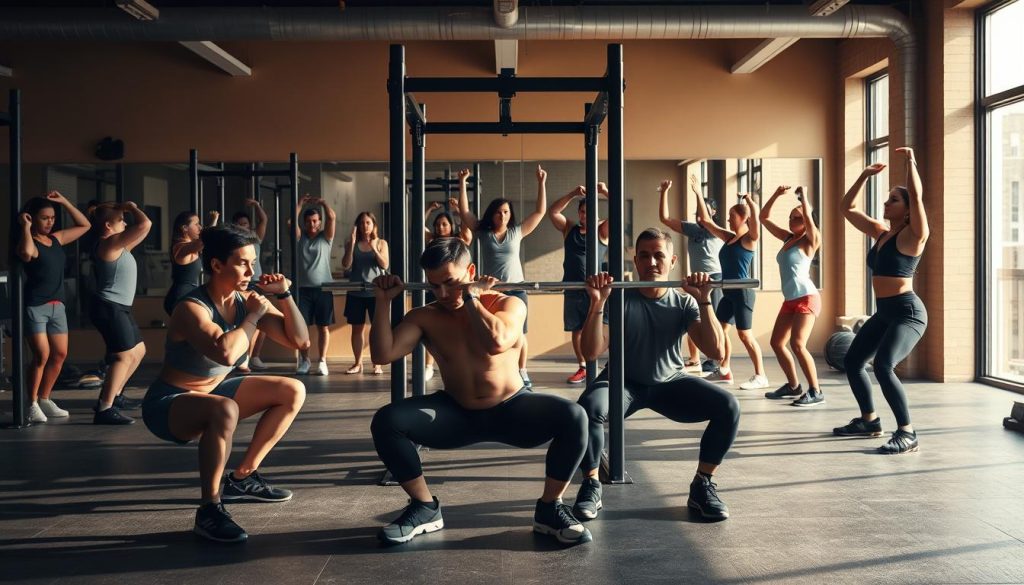
Smith Machine Split Squats for Unilateral Strength
This version builds balanced power between both sides. Face away from the equipment with the weight across your upper back.
Position one foot forward and the other back. Lower yourself until your front thigh becomes parallel to the floor.
This movement addresses strength differences between legs. It creates incredible stability and coordination benefits.
Smith Machine Sissy Squats for Quad Development
Emphasize knee flexion and extension with this focused approach. Rest the bar on your upper back while standing tall.
Bend your knees forward while rising onto your toes. This isolates your front thigh muscles for intense stimulation.
Many athletes use this for targeted quad development. It creates deep muscle engagement without heavy loading.
Smith Machine Hack Squats
Maximize quad engagement with this forward-leaning technique. Position your feet further out in front of your body.
Lean back into the bar during your descent. This shifts emphasis to your front thigh muscles dramatically.
The movement pattern reduces lower back strain significantly. You can focus purely on leg development.
Smith Machine Sumo Squats
Adopt a wide stance with toes pointing outward. This placement targets your inner thighs and glutes effectively.
Keep your torso more upright throughout the movement. This variation engages your posterior chain powerfully.
It’s excellent for developing hip mobility and strength. Many find it more comfortable for their joints.
These creative approaches offer numerous training advantages:
- Build balanced strength between both sides of your body
- Target specific muscle groups with precision
- Reduce spinal stress while maintaining intensity
- Break through training plateaus with new challenges
- Complement your regular routine as accessory work
Experiment with different stances to discover what works best for you. Small adjustments can create significant results over time.
“Variety isn’t just the spice of training – it’s the catalyst for continuous growth and adaptation.”
Remember that proper form always comes before heavy weight. Master each variation with light loads before progressing.
These movements can transform your lower body development. They offer fresh perspectives on building strength and size.
Safety Considerations and Common Mistakes
Training smart means training safe. Let’s explore how to maximize your results while minimizing risks with this equipment.
Proper preparation prevents poor performance. These guidelines help you avoid common pitfalls many lifters encounter.
Proper Footwear Selection
Your shoes create your foundation. Choose flat-soled shoes instead of cushioned running shoes.
This provides better stability throughout your movement. Your feet stay connected to the floor securely.
Barefoot training works well too if your gym allows it. The goal is maximum ground contact and stability.
Avoiding Rounded Back and Poor Form
Maintain a neutral spine position throughout each rep. Rounding your back under load invites injury.
Keep your chest proud and shoulders retracted. This protects your spine and improves muscle engagement.
Don’t set the bar too high on your shoulders. You shouldn’t need to rise onto your toes to unrack.
When to Avoid Smith Machine Squats
This equipment isn’t for everyone. If the fixed path feels unnatural, don’t force it.
Listen to your body‘s signals carefully. Pain in knees, hips, or back means stop immediately.
Remember this movement differs from free weight variations. Don’t try to mimic exact barbell form.
Listening to Your Body’s Signals
Your body provides constant feedback during training. Learn to interpret these signals properly.
Discomfort means reassess your form or weight selection. Pain means stop completely and adjust.
Just because you can lift more doesn’t mean you should. Always prioritize proper technique over heavy loading.
“The best training program is the one that keeps you healthy and progressing long-term.”
Keep these safety essentials in mind:
- Choose stable footwear with minimal cushioning
- Maintain spinal alignment throughout movement
- Set appropriate bar height for comfortable unracking
- Respect the equipment’s unique movement pattern
- Stop immediately if you experience any joint pain
- Use weight that allows perfect form every repetition
- Consider professional guidance if you’re new to this training
Smart training choices lead to better long-term results. Your safety always comes first in the gym.
Conclusion
You’ve now discovered how this guided training tool can transform your leg development. The smith machine squat offers unique advantages for various fitness levels and goals.
Its safety features make it perfect for solo training sessions. You can push your limits without worrying about getting stuck under the bar.
Remember to always prioritize proper form over heavy weight. Your body will thank you for maintaining good technique.
Experiment with different foot placements to target specific muscles. This versatility makes it an excellent addition to any routine.
Most importantly, enjoy the process of building strength and confidence. This equipment provides a safe, effective way to achieve your fitness goals.